Updated: Oct 20, 2026
•4 min read
How Spindrift's small but mighty creative team keeps every flavor shoot-ready
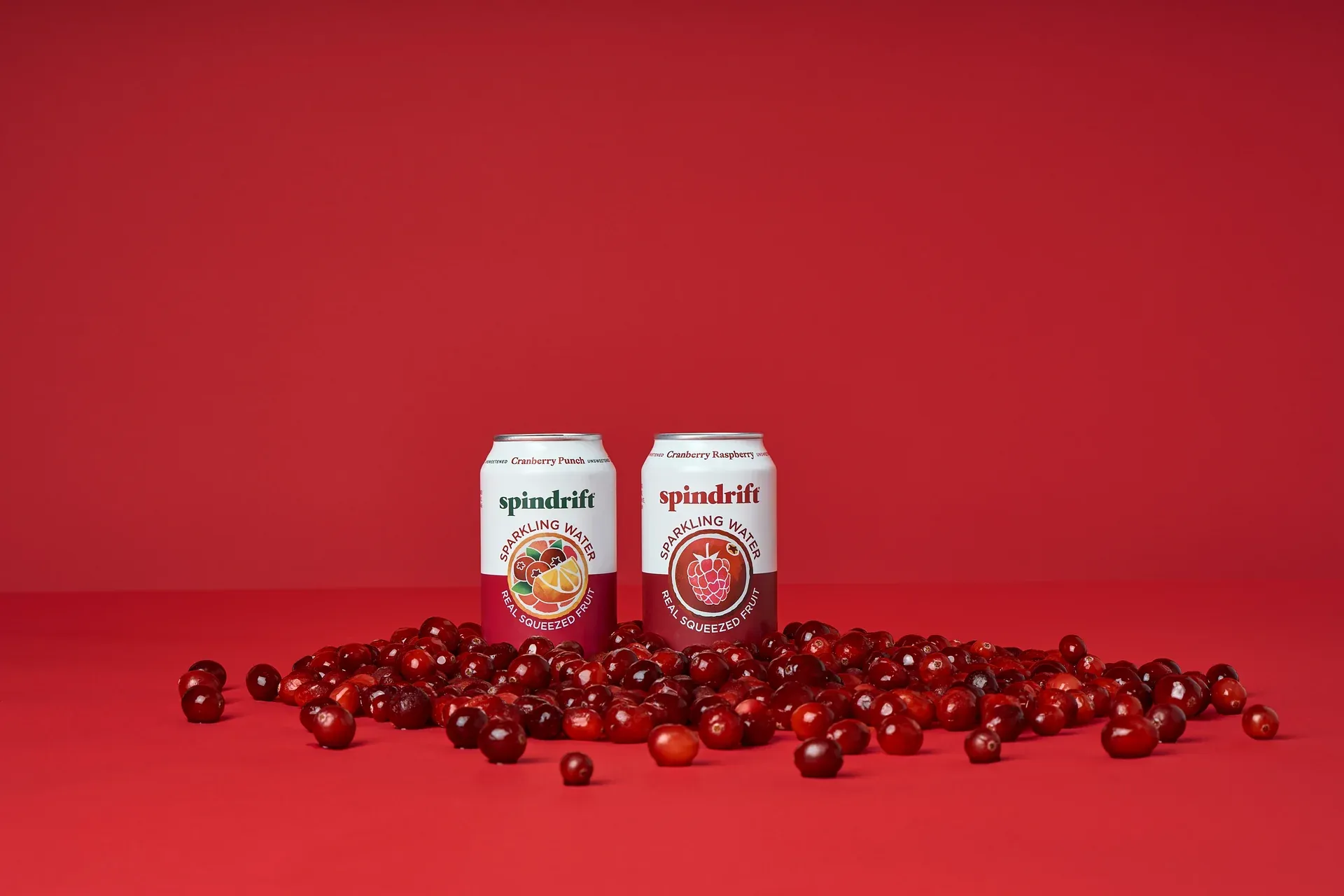
Table of contents
Real fruit, real shoots
800 photos, 10 selects
One home for every flavor
Back behind the camera
Time to look up
Real fruit, real shoots
Spindrift has been squeezing real fruit into sparkling water since Bill Creelman founded the company in 2010. What started in Boston has grown into a national brand, with dozens of flavors on shelves at Whole Foods, Kroger, and Starbucks, and a portfolio that now spans sparkling water, Spindrift Soda, Spindrift Spiked, and Spindrift Tea.
Every new flavor needs a story, and that story starts with a shoot. The team behind those shoots is small: a director of creative, a graphic designer, a copywriter, and Michael Bueno, Spindrift's digital content creator. Between them, they handle pre-production, post-production, and much of what other brands would hand to an agency.
"We kind of work like an internal agency," Michael says. "People come to us with requests, and we help them bring whatever they're speaking on to life in a way that's possible for our small team."
800 photos, 10 selects
A Spindrift shoot starts with mood boards and a shot list from the trade team, with every point-of-sale size the photos need to fill. Michael plans for coverage: one wide frame cropped for as many uses as possible. Then he shoots, often a lot.
"I'll upload, let's say, 800 photos, and maybe we'll use like 10 of them."
Those 800 frames go into a raw board in Air, where he rates the strongest with five stars. It works like a digital contact sheet. His designer picks the frames she wants, Michael edits them, and new versions stack on top of the originals as feedback comes in. Approvals used to happen in Slack. Now they happen on the asset itself.
Every comment, every version, every approval is right there on the file. If someone asks why we went with something, I can just show them.
Because versions stack instead of multiplying, outdated files stop circulating. For a brand whose packaging changes in subtle ways from one season to the next, that matters at the shelf.
One home for every flavor
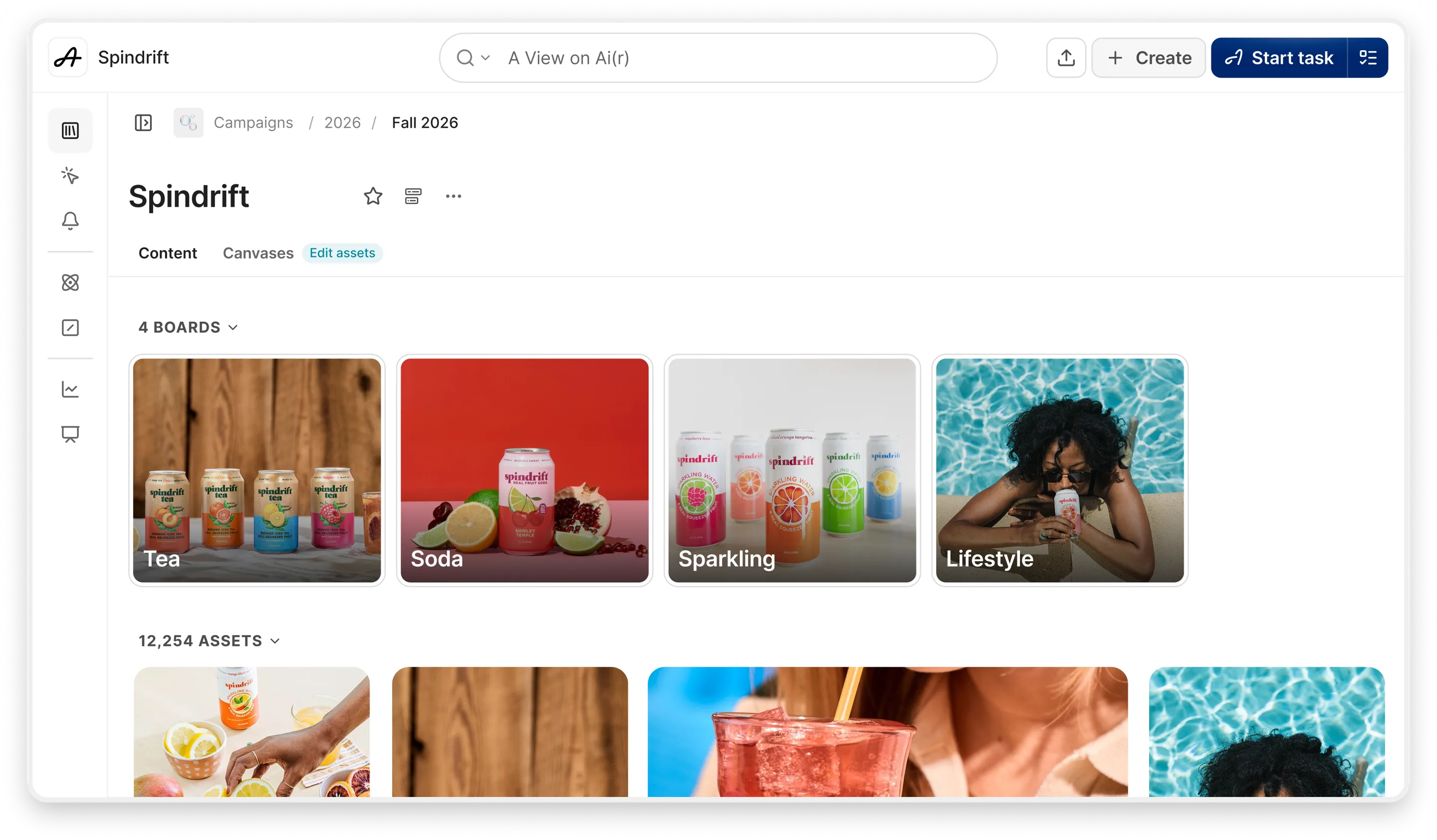 After 15 years doing this work, Michael arrived at Spindrift with a folder structure he trusts. He organizes by year first, then by format (photo, video, design, copy, influencer), then by sub-brand. Influencer content gets its own space because usage rights travel with it. Social content is organized by month.
The rest of the company finds what it needs on its own. Teammates search "Fuji apple point of sale 2026" and land on the right files. The trade team, which delivers catalogs to sales, now shares links instead of downloading and re-uploading. Michael calls Air his happy place: "When you're a visual person, it's nice to feel like, yes, I've landed in the right place."
Back behind the camera
Lately, Michael has been testing Air's agent capabilities. He describes them as his PA. He asks Air to surface every asset with a comment he's tagged in, or to pull every five-star frame into a new board. Next on his list: having Air build each year's board structure from the last one, a job that currently takes him about an hour.
Every hour saved goes back to the part of the job he signed up for.
I'm fine with logistics, but I'm a shooter. I want to spend my time shooting photos, videos.
Time to look up
Michael studied film and holds a master's in it. He now teaches video production and film ethics on the side. Moving from cinema to social-first content meant rethinking how he works, but the fundamentals stayed the same.
He joined nine other creatives on Air's roof in New York for A View on Air, a series about craft, change, and what AI should actually do. In the video below, he talks about what keeps him behind the camera, and the moment when everything in a shot finally aligns.
Watch the full series at A View on Air.