Published: Nov 03, 2026
•4 min read
How NOX turns terabytes of tour footage into content that moves culture
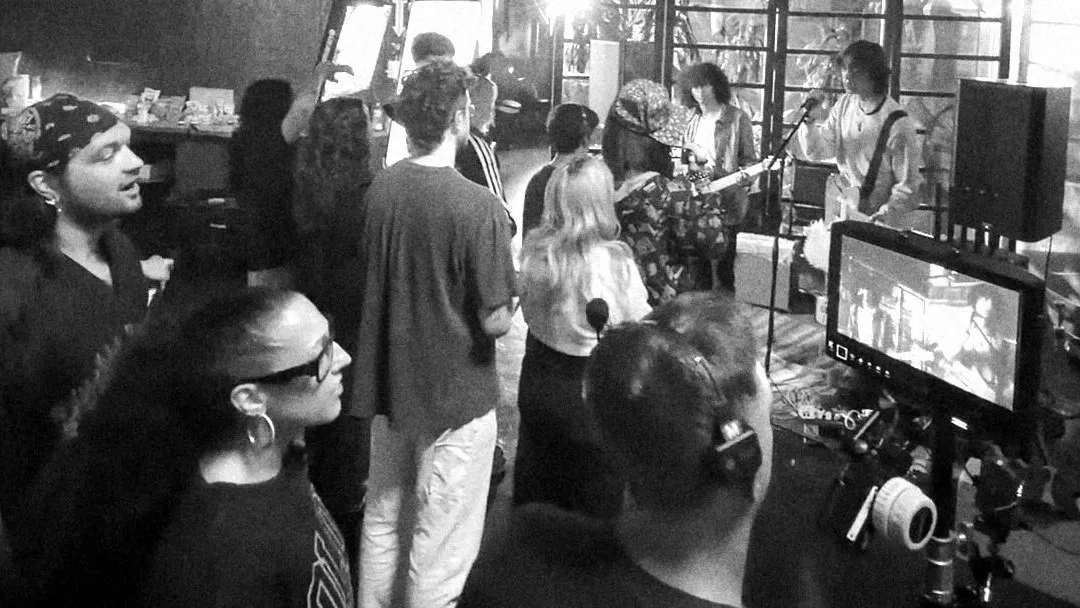
Table of contents
Built in the music world
One home instead of three
Footage from the road, sorted on arrival
Feedback from every time zone
From one still to a week of reels
Less digging, more directing
Built in the music world
NOX started in 2018 with a client roster rooted in music. Black Coffee was one of the first. Today the agency works with artists, brands, and creators like Avril Lavigne, Marshmello, SoundCloud, and Dollar Shave Club, across three arms: NOX Media for social and content, NOX Studios for production, and NOX Network for partnerships and original media. Over the last 12 months, its work has generated more than 15 billion organic impressions across client channels.
Matt Ligotti, Co-founder and Chief Creative Officer, came up through years at VaynerMedia, producing for brands like Chase and Sour Patch Kids. At NOX, he oversees the entire creative department: a large network of contractors and thousands of assets every quarter. That volume is why NOX needed to change how it managed its creative work.
One home instead of three
Before Air, NOX split its creative across Box for storage and Frame.io for review, with Dropbox in the mix. None of them did it all. So the team migrated everything into Air, carrying custom fields over to preserve details like who uploaded each file.
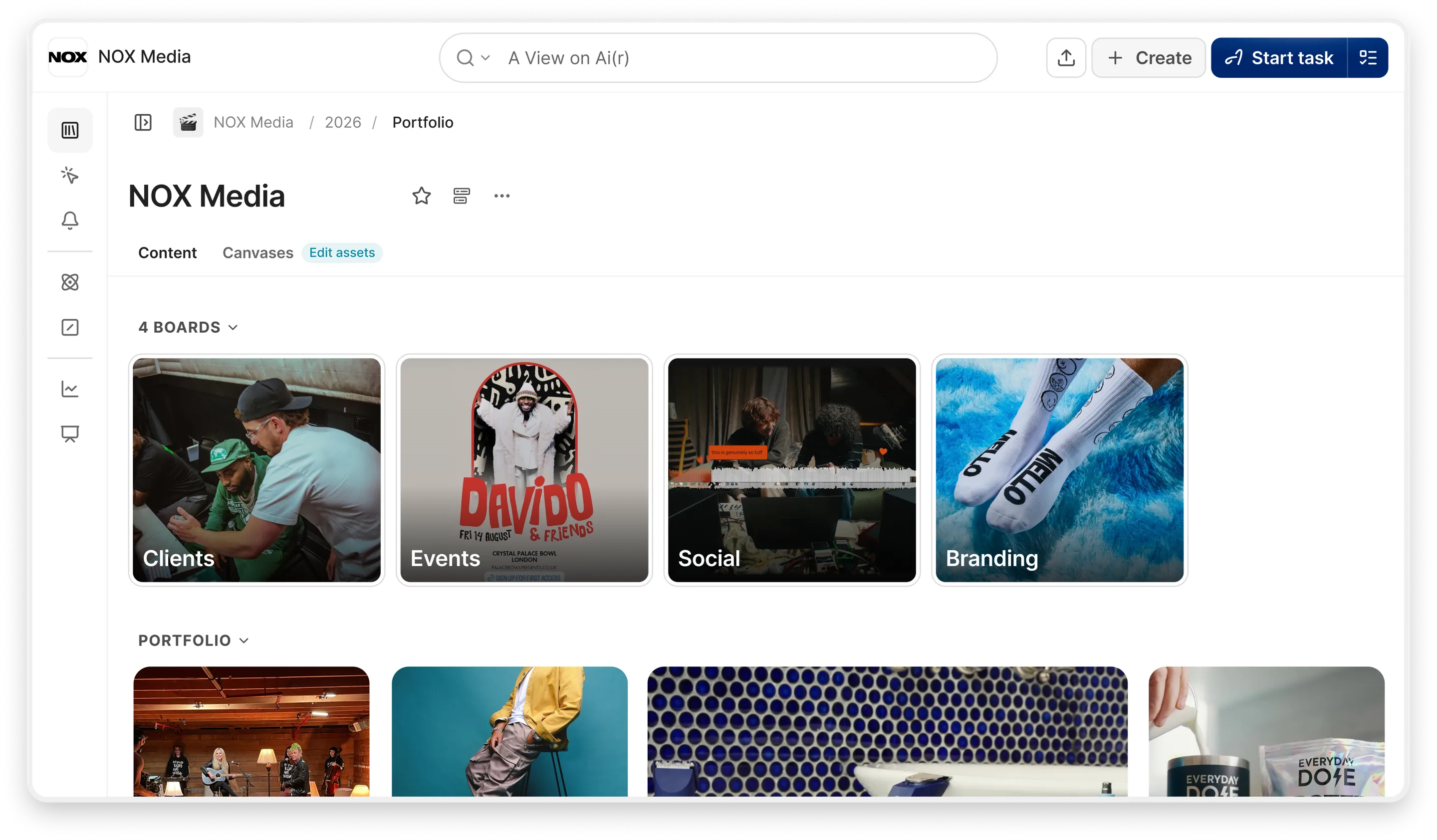
The structure now mirrors how NOX works. Retainer clients, the agency's core social business, are organized by month. The studio side, built like a traditional production company, breaks each campaign into video, photo, raw footage, and behind the scenes.
That made a difference with SoundCloud. NOX produced the brand's H2 campaign, and SoundCloud liked how quickly the team moved so much that it handed NOX its social channels too.
Footage from the road, sorted on arrival
Some clients never stop. Country artist Ian Munsick is on tour almost constantly, and footage comes in from his shooter, NOX's crew, and anyone else on the road. Instead of chasing files, NOX shares a content collection link. Sometimes it goes up on screen as a QR code, so footage lands straight in the right board.
From there, account managers use transcriptions to sort through clips and decide what to schedule, what goes to an editor, and what goes back to the artist to post. Then there's search.
The biggest gamechanger has been the search functionality
Feedback from every time zone
 NOX's editors work wherever they are. One is based in Southeast Asia. He uploads a cut, the account manager leaves comments on the frame, the next version stacks on top, and it moves to approval. Slack notifications let the team know when something new needs eyes. Editors work in Premiere, and Air's Premiere integration brings every note straight into the timeline.
The feedback stays connected and in the context of the creative. It's a better way to work.
NOX is now asking brand clients to keep their feedback in Air too, so every note lives on the asset it's about.
From one still to a week of reels
NOX's team has moved its AI work into Air, where it sits next to the client assets it starts from. Canvas turns static images into Instagram reels, and bulk edits and resizes cover every placement at once. For Miami Ad School, NOX has a set of Skills that animate static ads in a consistent style, so each new ad starts from a saved workflow instead of from scratch.
Canvas has a place in new business too. Matt's team uses its mockups (a phone, a billboard, a new setting) to show prospects how work will live in the world before anything is shot. Next up: templates for recurring artist content like ticket announcements, and an Air digest of what's waiting for approval across every board.
Less digging, more directing
Matt joined nine other creatives on Air's roof in New York for A View on Air, a series about craft, change, and what AI should actually do. His take on the grind will sound familiar to anyone who's worked in content: "Having to scan through terabytes of footage that somebody just dumps on you has got to be the closest thing to torture."
In the video below, Matt talks about what AI should take off a creative's plate, and what it never will. Watch the full series at A View on Air.