Published: Oct 27, 2026
•4 min read
Hard Rock Digital’s greatest hits, all in one place
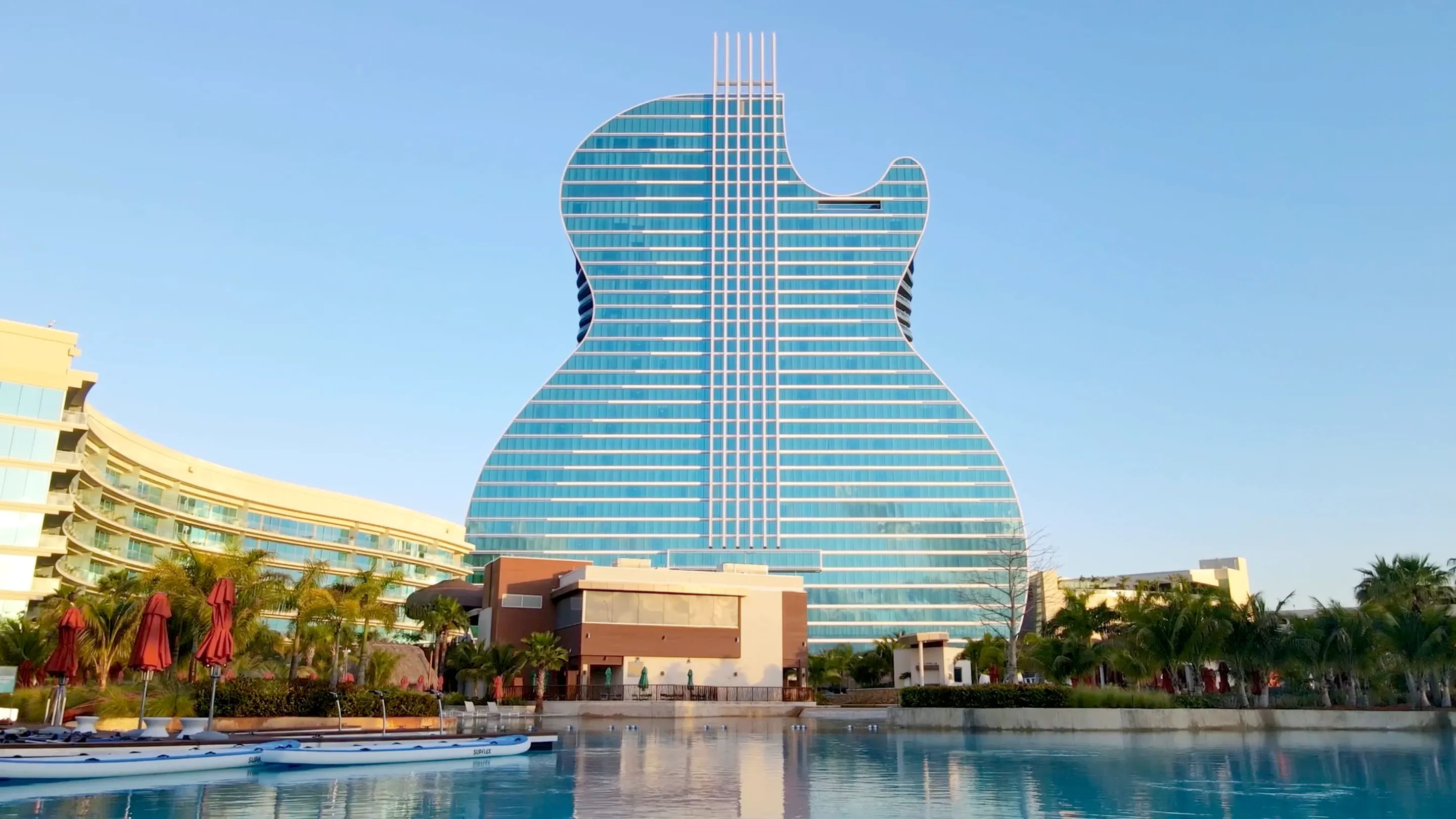
Table of contents
Legendary brand, startup pace
Two systems, one home
Built around the sports calendar
From screenshot to source file
Process in the background
Legendary brand, startup pace
Hard Rock has spent more than 50 years building a name around cafes, hotels, casinos, and rock memorabilia. Hard Rock Digital brings that energy online. Headquartered in Hollywood, Florida, with offices in Atlantic City and Austin, it runs Hard Rock Bet, the brand's sportsbook and online casino, along with the Unity by Hard Rock loyalty program, across a growing list of states.
The marketing creative team behind it moves at a pace that matches the sports calendar. On any given board, there are at least 120 open projects. Each one might call for 30 assets: promos, CRM banners, paid social, partnerships, out-of-home. "Hard Rock operates very startupy," says Emily Lima, creative operations manager. "It's very scrappy. We're rolling with the punches always."
Emily owns the systems that keep all of that moving: tool procurement and onboarding, staffing plans, and process. Creative project managers handle intake and resourcing day to day. Emily makes sure the infrastructure underneath them holds.
Two systems, one home
Before Air, the team's creative lived in two places. Working files and finals sat in Dropbox. Approved brand assets lived in Brandfolder. Getting a finished asset to stakeholders meant project managers downloading from one platform and uploading to the other. If something changed after handoff, which it often did, they did it all again. Dropbox had another problem. People poked around and pulled files that weren't final. Tim Tuley, VP of Creative & Design, brought Air to Emily as a Dropbox replacement. After vetting it, she saw a bigger opportunity.
Initially we was just going to have it replace Dropbox. But I realized this can replace Brandfolder too. A true one-stop shop.
The team moved everything on to Air. Two platforms became one, with cost savings on the books and, as Emily puts it, "huge efficiencies in our workflow."
Built around the sports calendar
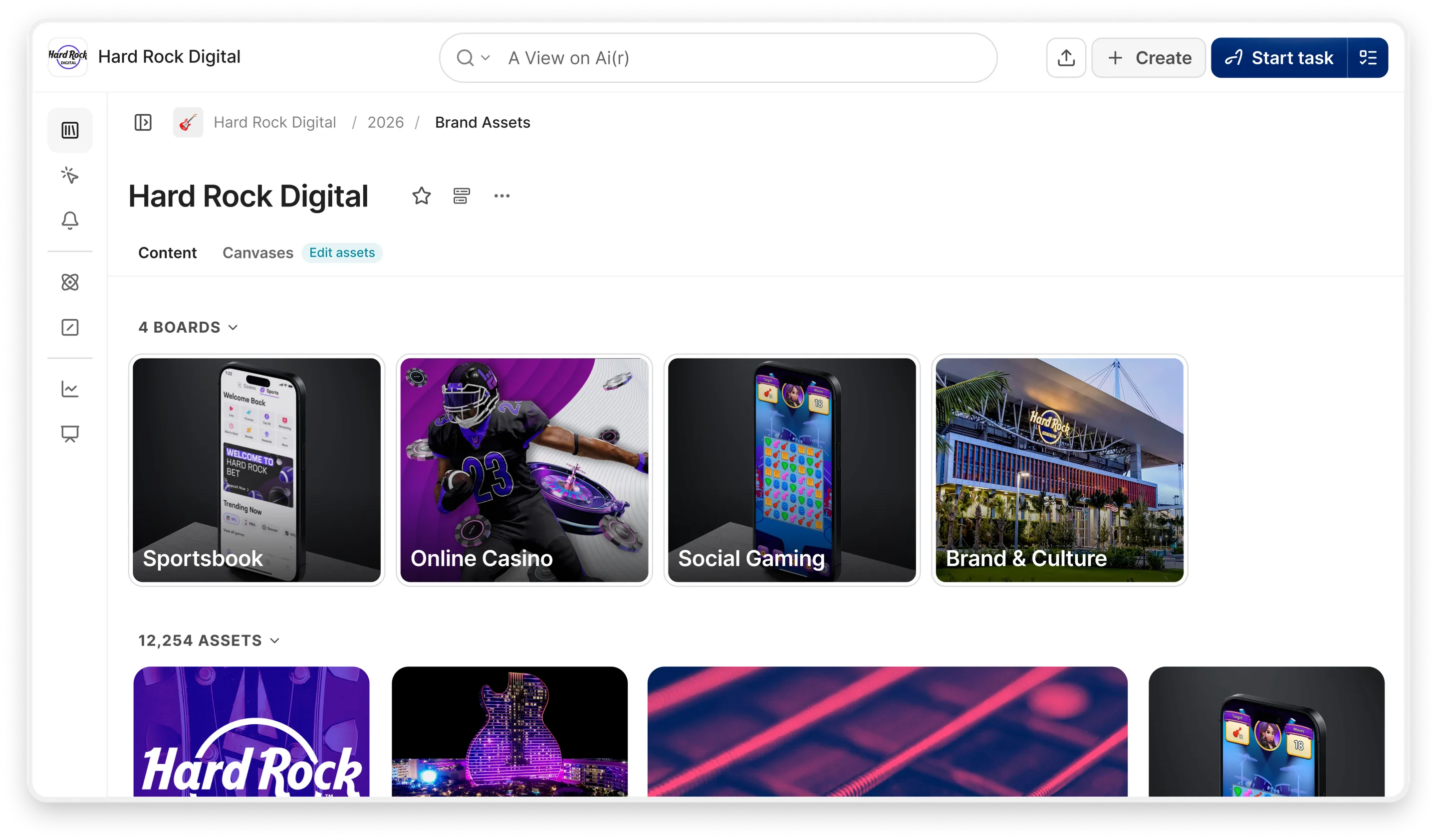 The structure is simple by design. A working files library holds active projects and brand exploration. A global library holds the Brand Kit and legal language. A final deliverables library is the only place stakeholders need to go.
Every new project starts from a board template with two sections: work in progress and final deliverables. An early version had more sub-boards, but the team found they slowed things down and cut back. Review is tiered. Design and copy leads approve business-as-usual work like promos, where the team already knows what good looks like. High-visibility work goes to the creative director.
Once a project is approved, the project manager duplicates its final deliverables board into the stakeholder library. The creative team still thinks in tentpoles ("find all the Super Bowl stuff"), but channel owners don't. So the team recently reorganized final deliverables by channel. Someone on paid media or CRM opens one board and sees everything done, edited, and sized for them.
Agency partners work in the same system. An embedded partner uploads finals to its own space, and Univision, the team's Spanish-language agency, supports a major presence in South Florida.
From screenshot to source file
With two libraries' worth of history combined, finding things got easier, not harder. Emily uses exact search with project codes. Leadership leans on smart search. When Tim couldn't find the loyalty program's guitar case design, he had a screenshot from Instagram. A reverse image search pulled up the original.
Control got easier too. When usage rights end, assets can expire out of the workspace instead of lingering where someone might reuse them.
We have a lot more control. It feels way more manageable.
The team is building on that foundation. The video and motion team uses Canvas to turn static assets into motion. At the team's July onsite, the video lead ran a live demo of how he animates in Air. Next up: templates that let stakeholders make quick changes on their own, like updating a date or swapping an offer from $500 to $100, so designers can stay on the work that needs them.
Process in the background
Tim joined nine other creatives on Air's roof in New York for A View on Air, a series about craft, change, and what AI should actually do. His take sums up what Emily has built: "Process can set you free, as long as it works in the background." In the video below, Tim talks about the craft behind Hard Rock's creative, and why the system around it should stay out of the way.
Watch the full series at A View on Air.